
“Everyone experiences scars in life, and so does pottery. I believe the most important thing is to accept—accept their existence and learn to live with them.”
As we looked at the piece titled “Endurance,” wondering why such prominent scars were left visible, Teacher Yu passionately led us on a tour. Using concepts from Eastern and Western cinema, calligraphy, and painting, he explained his creative vision for this series—encompassing mountains, clouds, wind, mist, waves, and waterfalls—which forms his unique “Ceramic Landscapes.”
Endurance
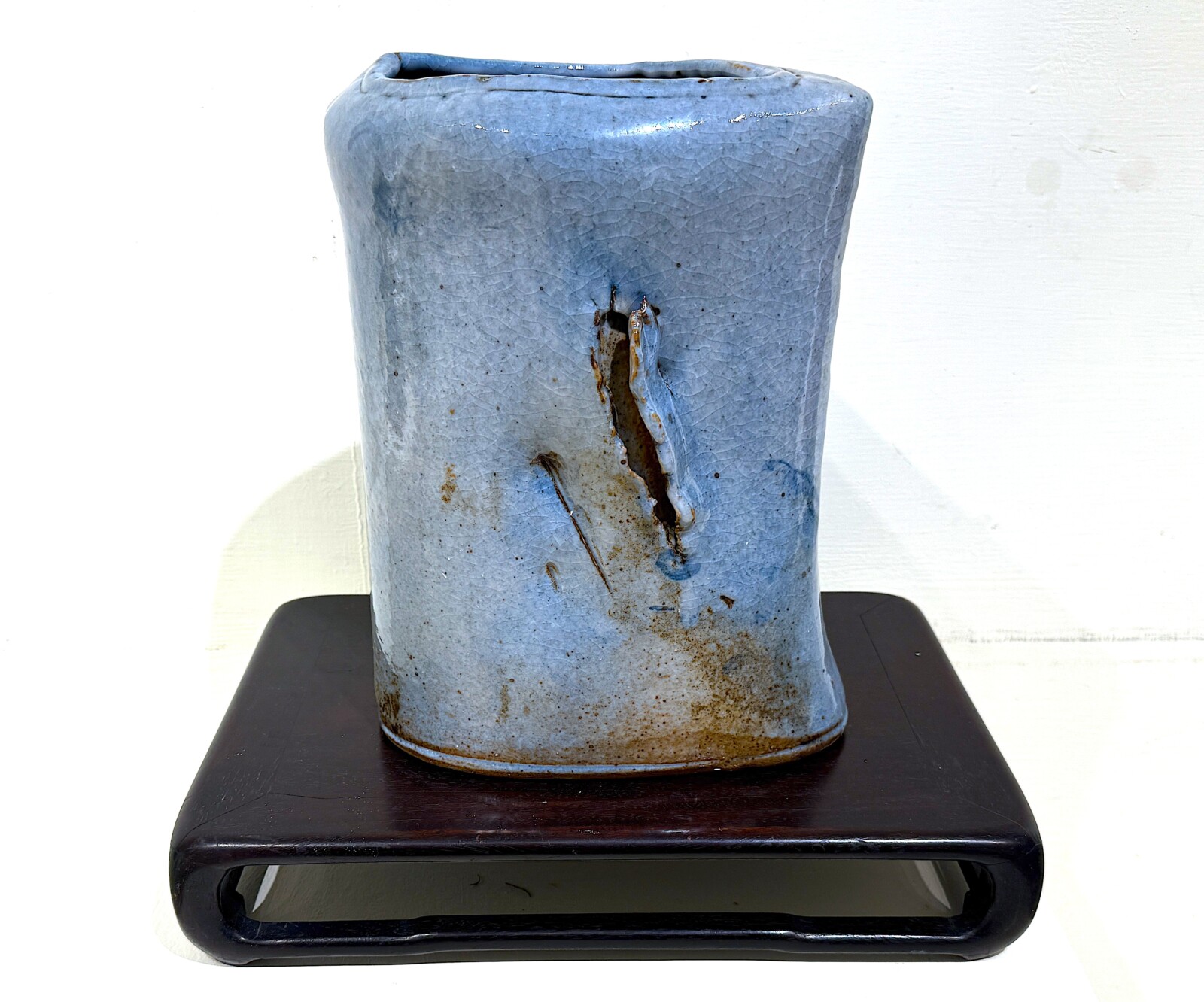
Ruban Yu: “I believe scars grow larger over time, from small to medium to large. But the concept I want to convey is this: just like when we watch a movie, if a general has a scar on his face, his character becomes vivid. Or a pirate with a missing hand and a hook—that is what I am contemplating.”
“Pottery is a manifestation of cultural concepts. Traditional Chinese ceramics pursue perfect symmetry, but I think of my works as characters in a play. Some are the refined leads, while others are like the eccentric or ‘crooked-mouthed’ characters in puppet theater—those are often the ones that touch your heart most deeply.”
“Most vessels on a tea table are made very formally—round and plump. But what I create is the atmosphere of ‘Wabi-sabi tea pottery’.”
“Many glazes feature crackles (Kai-pian). Without those cracks, you wouldn’t be moved.”
The Raw Flavor of Unglazed Clay
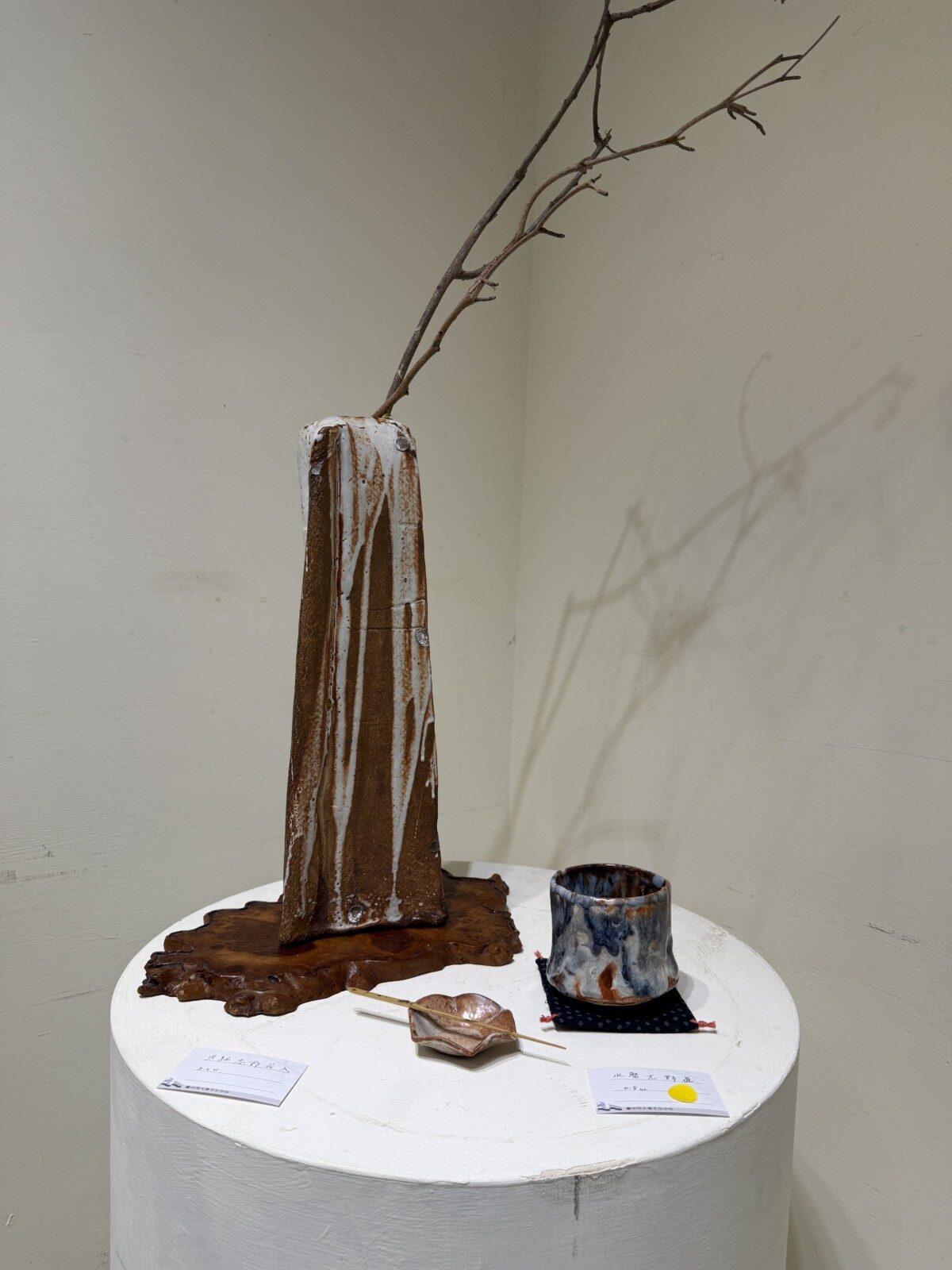
Ruban Yu: “In traditional Chinese ceramics, pieces are usually fully glazed. But pottery is essentially the art of earth and fire. I want to present the ‘clay flavor’ of the earth. Often, the unglazed parts are the true highlights for appreciation, rather than just the glazed surface.”
“I also use shell marks and side-firing techniques. It’s like the concept of ‘treating white space as black’ (Ji Bai Dang Hei) in Bada Shanren’s paintings. When we appreciate his work, we admire the entire space, not just where the ink is. The empty space is often the most masterful part of the arrangement.”
Clouds
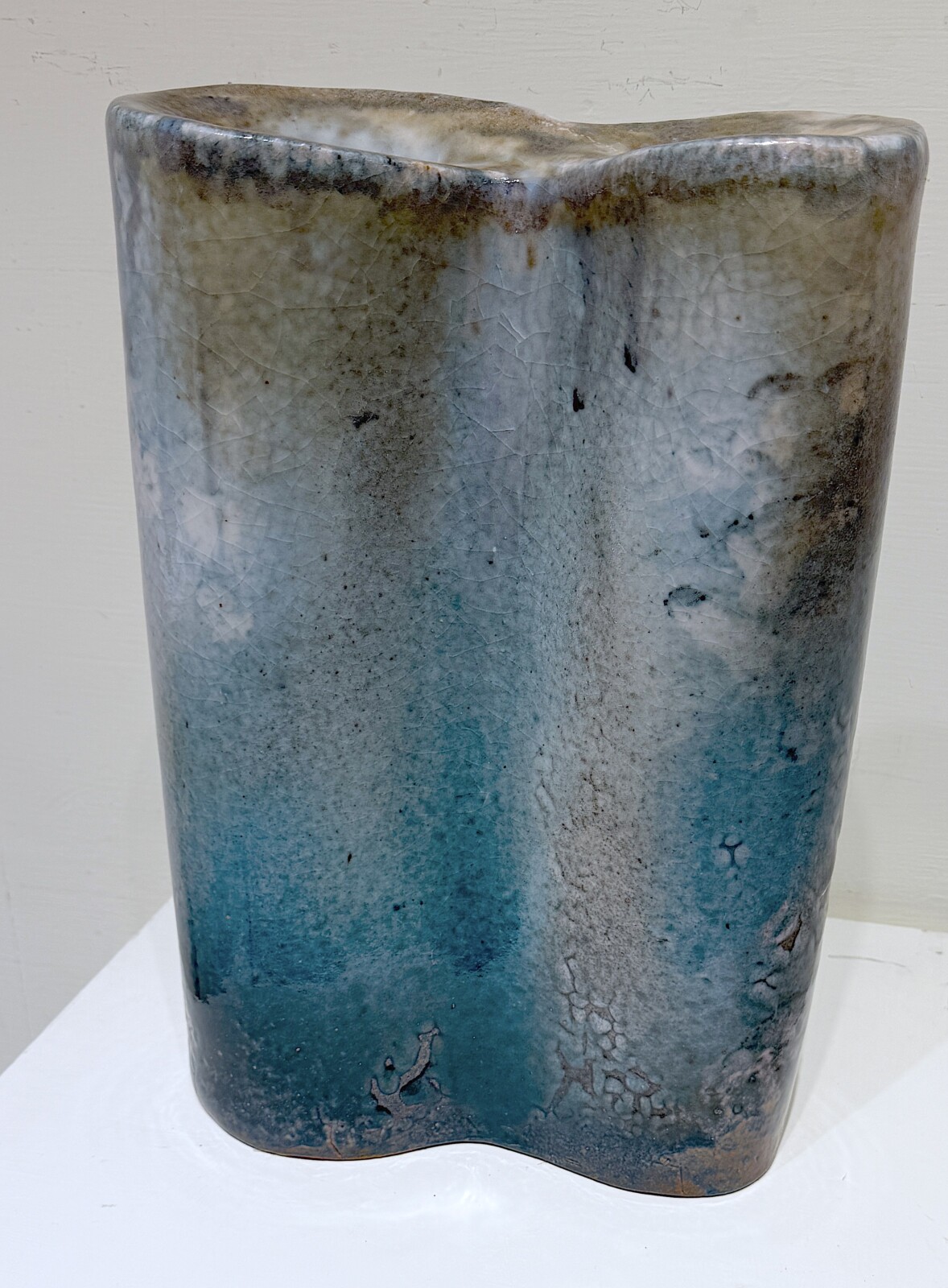
Ruban Yu: “This piece is titled ‘Clouds.’ It embodies the concept of infinity. In my previous jobs, I often noticed how our vision is blocked by walls and people during meetings. But if you simply look up at the sky, you see infinity. I love the song ‘Let’s Go Watch the Clouds’; it expresses that when your heart feels heavy, looking up can bring relief. That’s why I named this ‘Clouds’.”
Black Hole
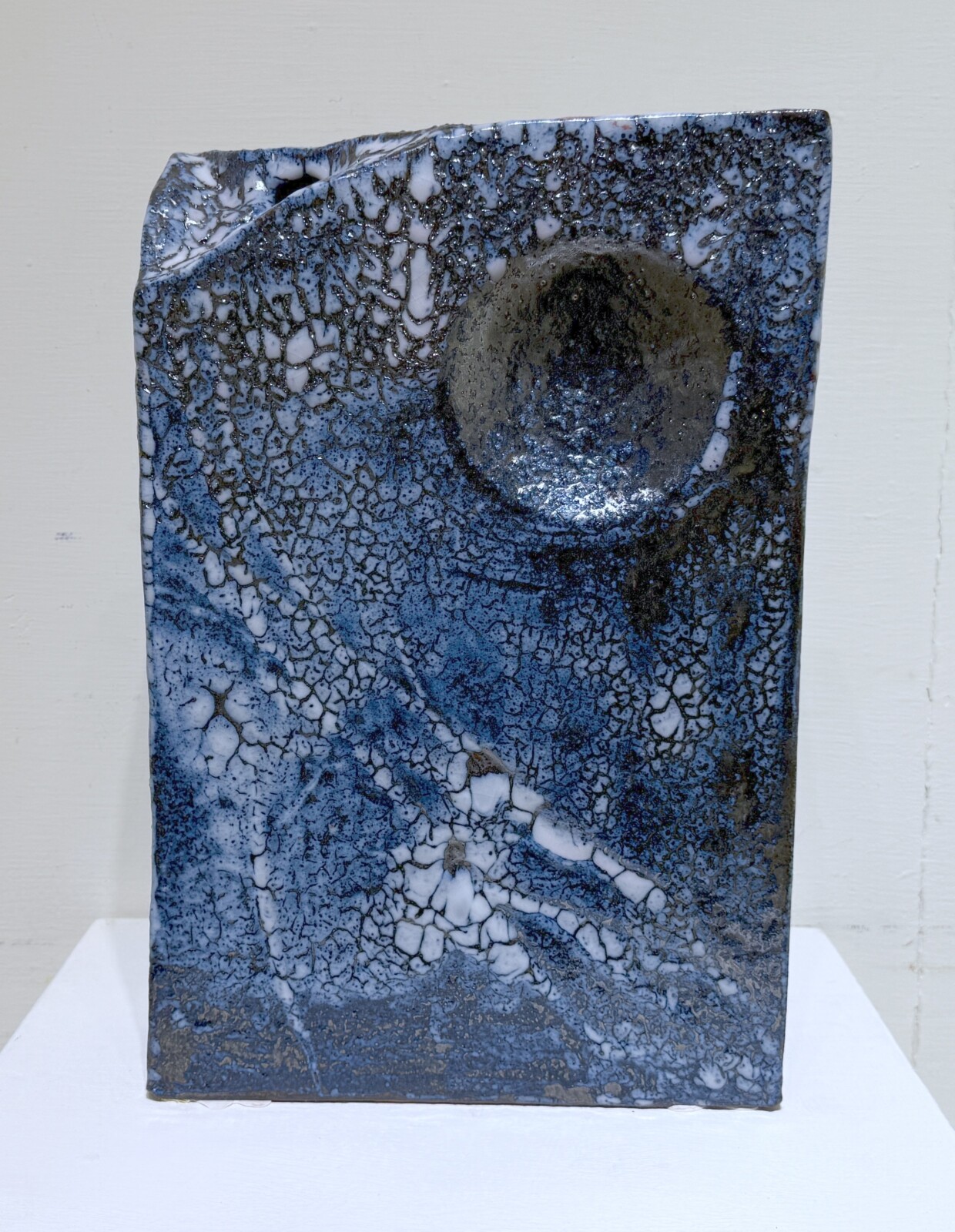
Ruban Yu: ” ‘Black Hole’ and ‘Wind Brushing Green Mountains’ were originally a pair. I wanted to capture the feeling of wind blowing across mountains. It’s like when we look out a window; if there is a tree, you see the tree first, then the mountains. This creates a sense of depth.”
Wind Brushing Green Mountains
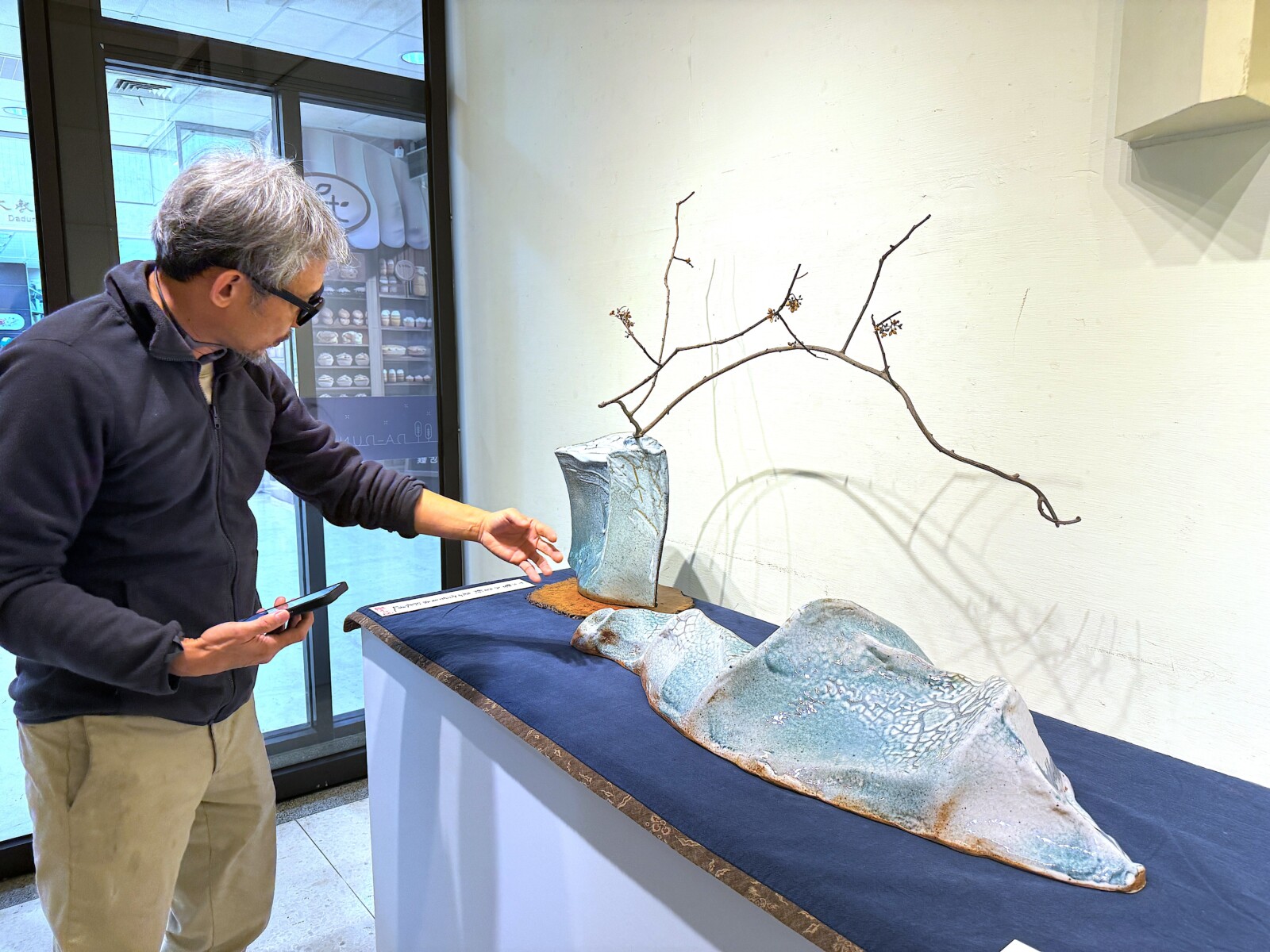
Ruban Yu: “These [textures] on top are clouds, and this also has the feeling of wind. My main goal is to express the sensation of wind brushing against green mountains.”
Ruban Yu: “For instance, when we gaze at distant mountains—imagine there is a window here looking out. If there is a tree planted nearby, you will see the treetops first, and then the distant mountains beyond. It creates that sense of… yes, that sense of depth and perspective.”
Ruban Yu: “Here, I created a vertical surface (in the shape of a floral vessel) to evoke the feeling of wind swirling up. This also represents the distant mountains; these are all quite abstract imageries. You might not realize it without an explanation, but once I start explaining, there’s so much to say—that’s the intended meaning. Of course, there are stories behind them, and they carry a very distinct feeling.”
Ruban Yu: “Many people are constantly thinking—it seems a floral vessel must be used for flower arrangement. Actually, I feel we should be even more relaxed about it. Having to change the water can be a chore, and the water eventually smells. Simply using a single withered branch to express the mood is enough. It doesn’t need to be extravagant; simple and elegant is fine.”
Ruban Yu: “I used the ‘beaded glaze’ (crawling glaze) technique on this part as well. I still believe in one thing: when a piece is fully glazed, it’s actually a sign of not letting yourself go; it means you are constantly chasing perfection. I feel that once we let go of that, our hearts become light. It’s like being able to accept that our clothes might get a bit stained—it doesn’t matter, as long as they are clean and we feel at ease.”
Sunlight on the Spiritual Mountain
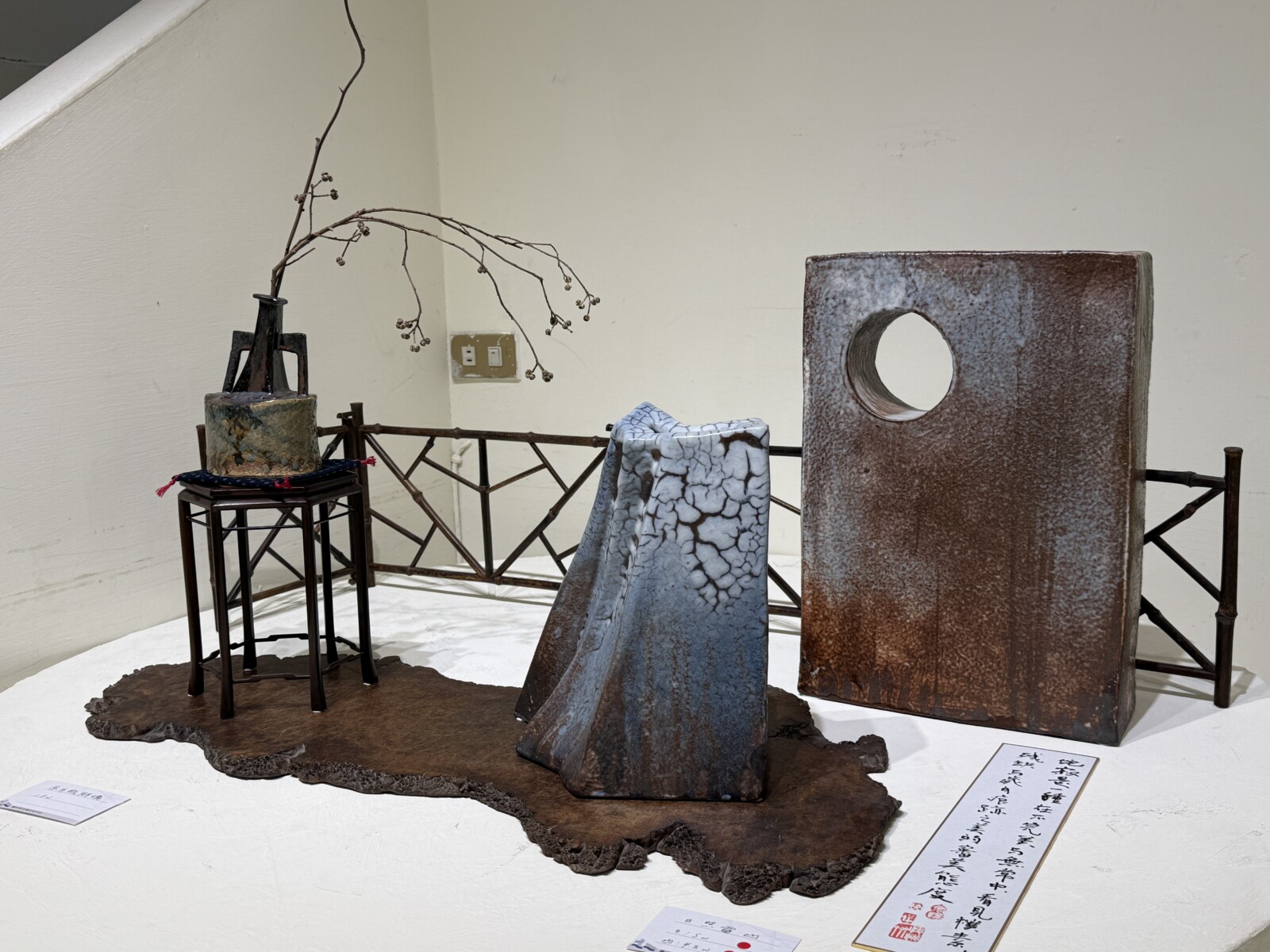
Ruban Yu: “I am a fan of Gao Xingjian’s work Soul Mountain (Ling Shan). I believe everyone has a spiritual mountain in their heart. Since we cannot build a physical mountain, I use abstract methods. For the ‘Sunlight’ piece, I created a hole to represent the sun—the concept of ‘sunlight shining through the forest’.”
Moonlight on the Spiritual Mountain
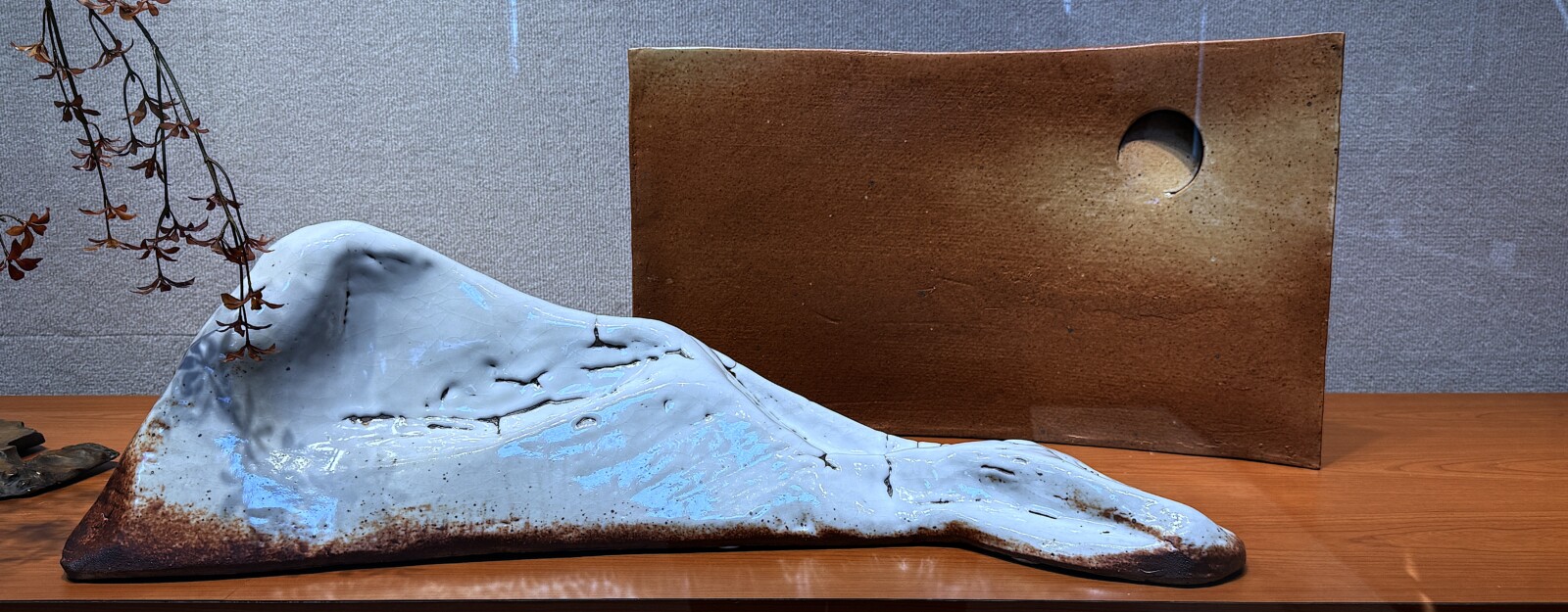
Ruban Yu: “This piece and Sunlight on the Spiritual Mountain actually share the same concept; this one is Moonlight on the Spiritual Mountain. The concept I wanted to express here is actually a bit… well, I happen to enjoy doing things the opposite way. Typically, the moon should be bright, but I wanted to express it through light and shadow. While dark clouds are usually dark, I made the bright areas faint instead. So, it actually feels as if the ‘dark clouds’ are what is illuminating the scene.”
Ruban Yu: “This is how I applied the glaze, to give it the feeling of—here is the moon, and here are the clouds. To create this set, I made about four or more versions of the back piece. Many people might think it looks simple, but if you look at the silhouette from above, it looks like a crescent moon. For this kind of screen-like vessel, traditional ceramics would usually include ‘feet’ (a base), but I felt that if I added feet, the overall form wouldn’t be clean and minimal enough.”
Fog
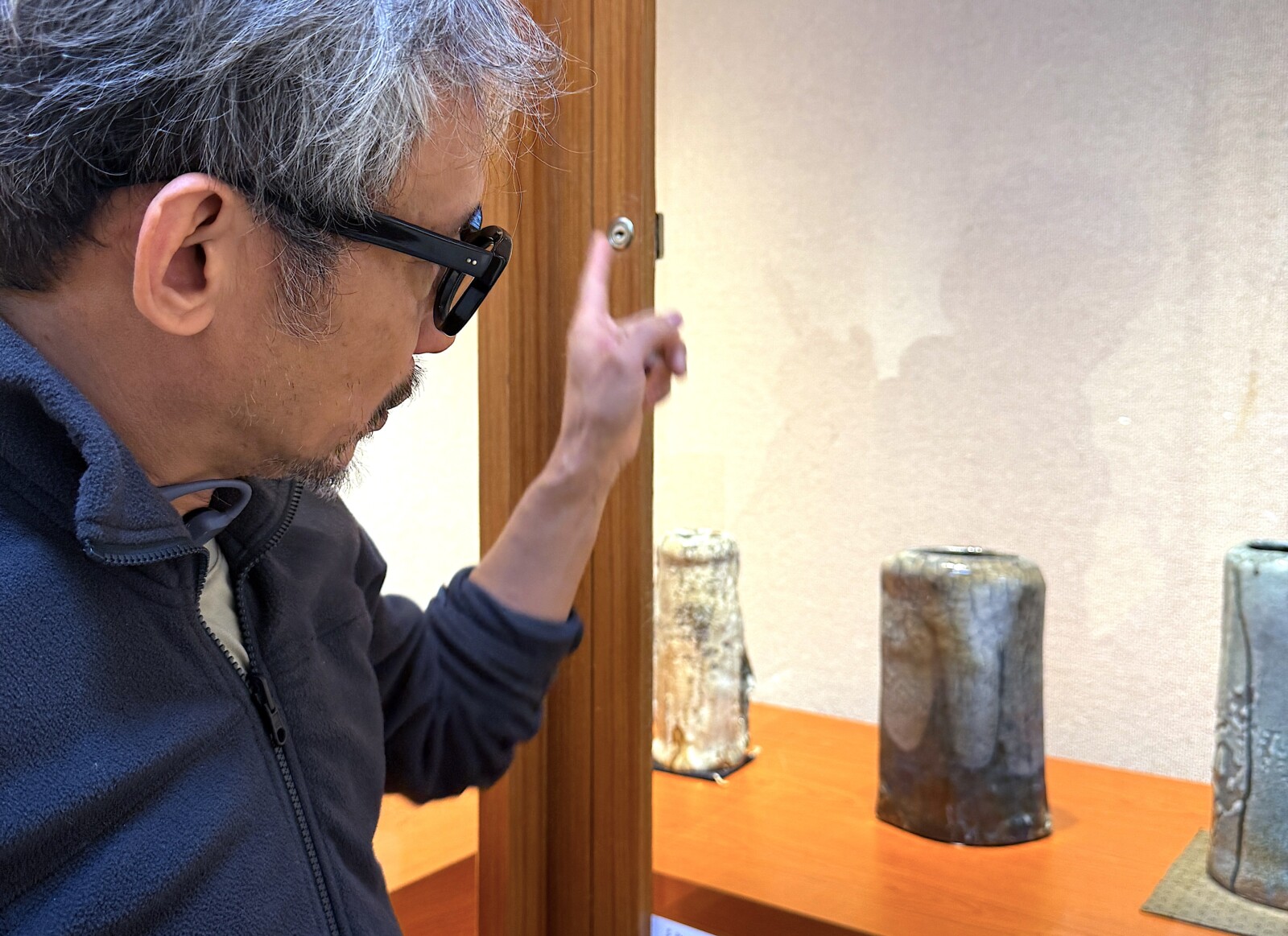
Ruban Yu: “Through that gray tone—which we achieve by allowing carbon to trap inside—it becomes like this. It gives you the feeling of being inside smog, so I named it Mist. You can feel that kind of industrial oppression.”
Ruban Yu: “When I apply the glaze, I aim to leave that concept behind; the far end feels very much like the atmosphere after the Industrial Revolution. I’ve made quite a few of these, using a method of layering the glaze many times. I believe, especially with this style, there are many situations where you have to ‘splash’ the glaze with abandon to achieve that effect. If you aren’t feeling relaxed in your heart when you start splashing, the result will look very stiff and constrained. Of course, you must be highly proficient with the glazing process itself; only then can you create something like this.”
Falls and Billowing Waves
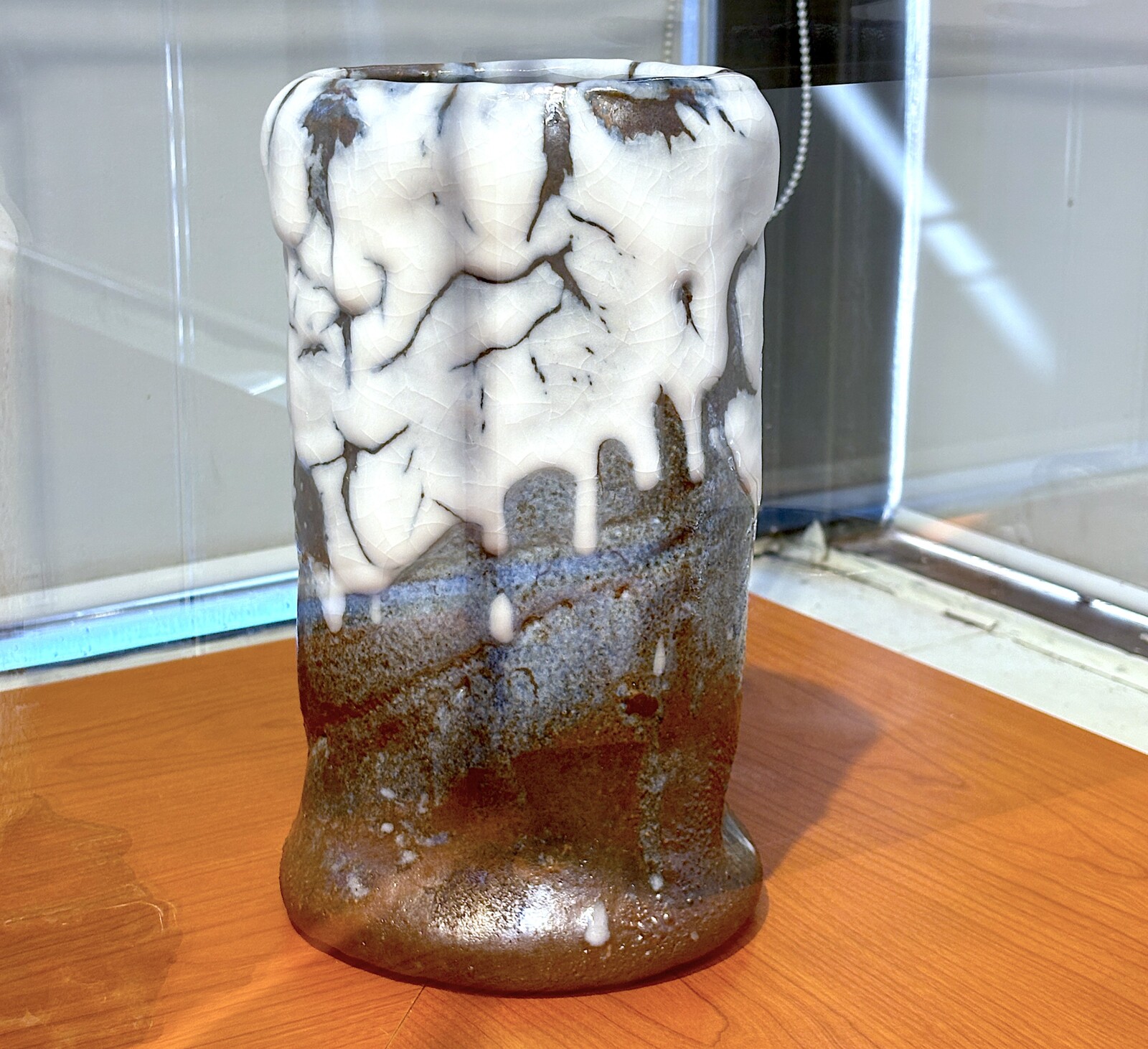
Ruban Yu: “This is a close-up view of a waterfall. On this upper part, if you have ever seen the churning surf where the waves crash—it is exactly that kind of feeling.”
Tea Bowls: Art in the Palm
Ruban Yu: “My tea bowls are about promoting what I call ‘Art in the Palm.’ They are fired multiple times. After firing, I use a water grinder to sand them down, then put them back in to fire again, re-glaze, and fire once more—sometimes four or five times. Of course, many seniors in the ceramic world consider multiple firings ‘unprofessional,’ but I believe everyone has their own way of expression. These are all about using physical principles to create specific glazing effects.”
The Playfulness of the Foot-ring
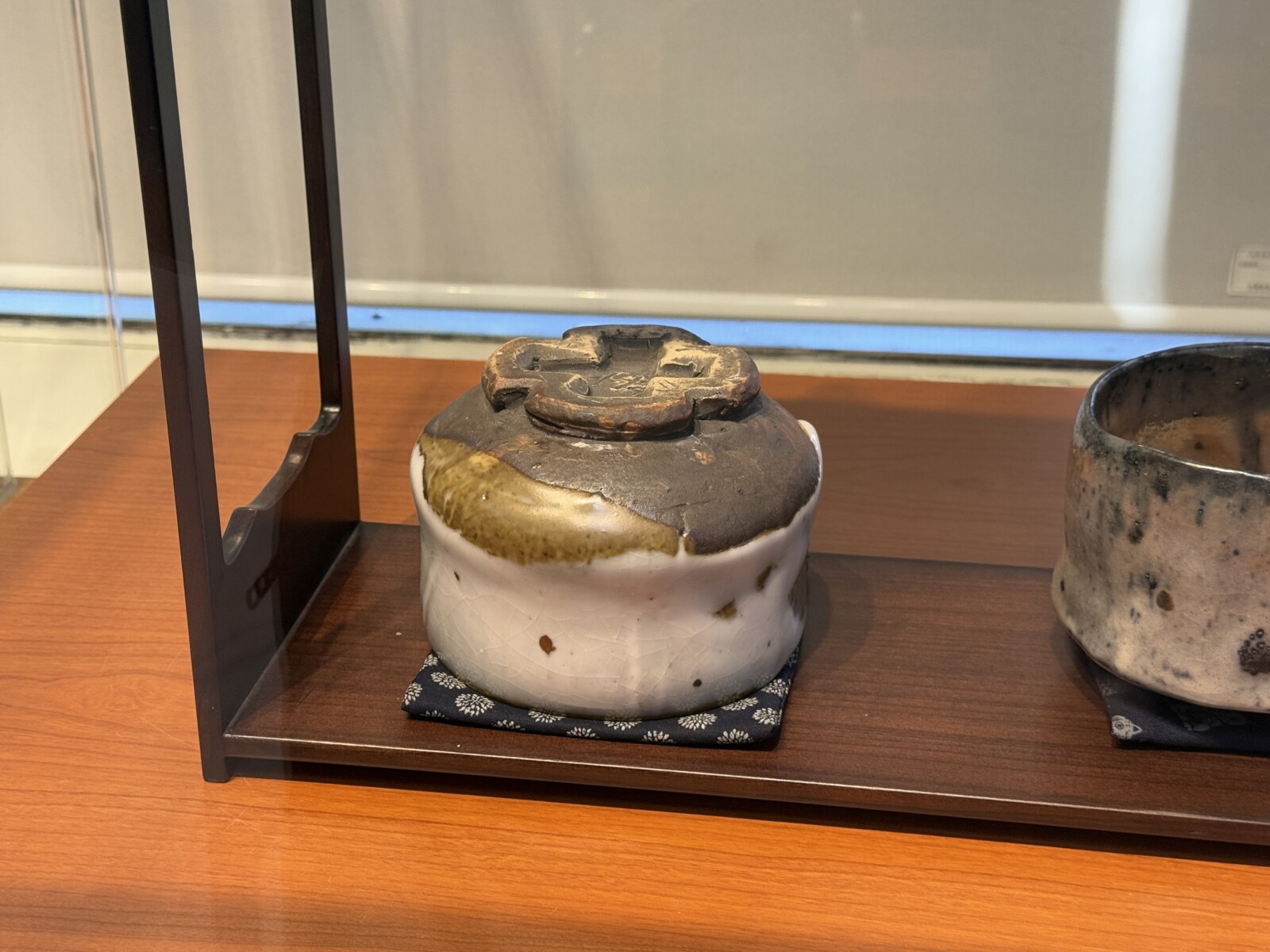
Ruban Yu: “This is actually just to express that the foot of a bowl doesn’t always have to be thrown perfectly round on a wheel—that’s all. I mean, there are many ways to do it. In the modern era, through precision manufacturing, many things are already made very accurately, very straight, and very round. We no longer need those things; instead, what we need is this.”
Ruban Yu: “I also specifically want people to know that the ‘foot’ can be made that way. You can make it look very ‘man,’ very delicate, or very wild. For example, when we go to Chiang Kai-shek Memorial Hall and see the Honor Guard standing there, you feel they must be very persistent and determined to stand like that. But sometimes, we actually stand like this (leaning on one leg).”
Ruban Yu: “When expressing myself, I sometimes deliberately make the tea bowl asymmetrical or ‘crooked.’ I want the person holding the bowl to feel relaxed in their heart. That’s why we are now promoting drinking tea with a bowl. Because when you use a teapot, even just the thought of washing it can make you feel a bit resistant; and if you accidentally chip it—especially if it’s a famous piece worth tens of thousands—it hurts. I collect many teapots myself, so I know that feeling (laughs). Gradually, we want to promote a simpler way—just tossing the tea leaves or chrysanthemum tea directly into the bowl and drinking it like that.”
Mountain Landscapes in the Hand
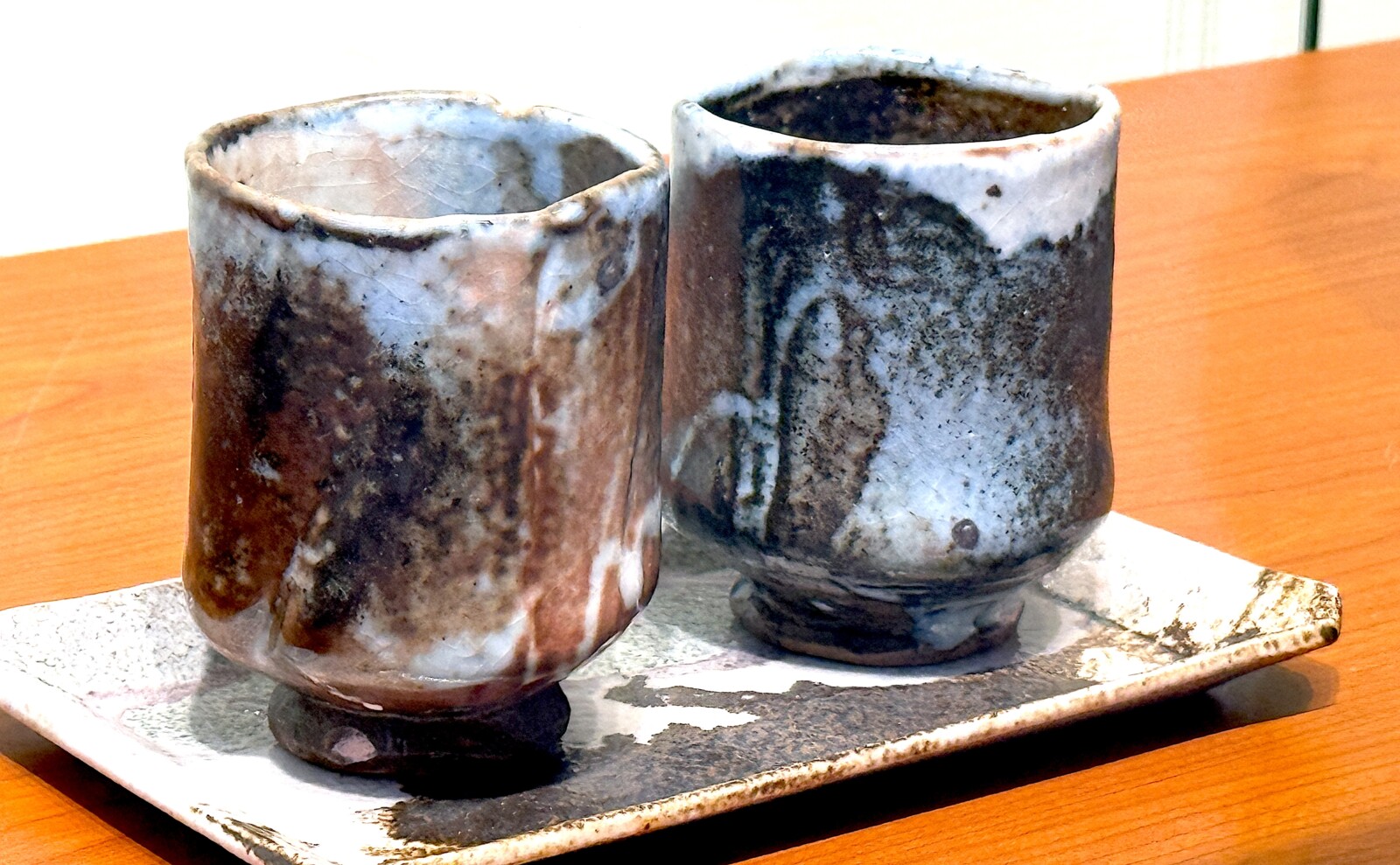
Ruban Yu: “This one (left) follows the same concept, but with a focus on ‘percussion’ (facet-cutting). I particularly like facet-cutting; sometimes I apply it to cups, and this one also has facet-cutting at the bottom. Ergonomically, it happens to fit the hand perfectly for gripping.”
Ruban Yu: “The glazing on this one (right) is something that photography enthusiasts might recognize. It’s a silhouette of mountains with the sky in the distance. Usually, if we look at distant mountains, the peaks are dark while the bottom is actually brighter. So, when I was glazing, I used masking techniques first, and then applied this color.”
Open Sesame
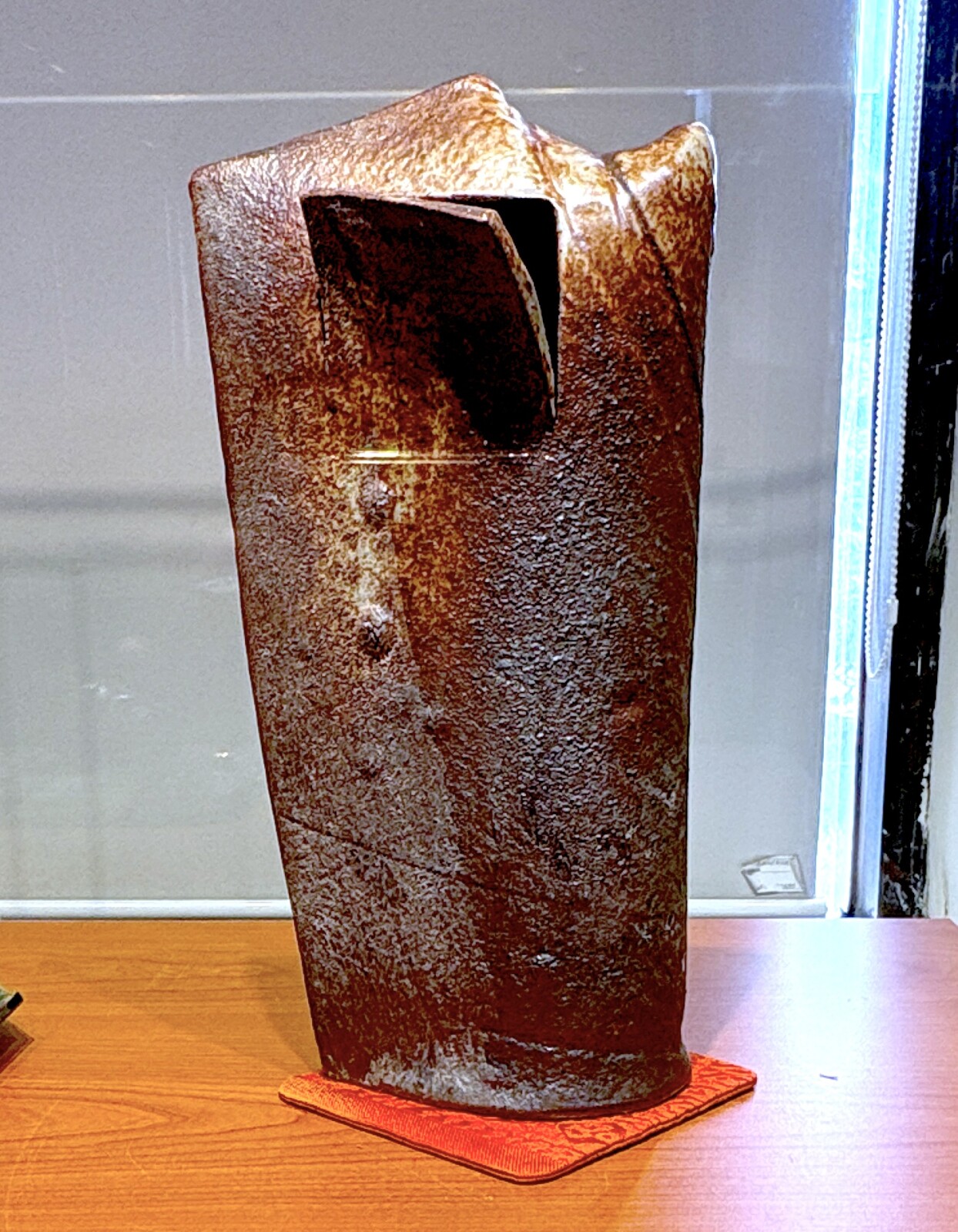
Ruban Yu: “This one is quite special. You see these little dots on the surface? Those are from soil fragments I collected in the countryside after typhoons. I crush them with a hammer and then knead them into the clay. The organic matter inside then ‘pops’ out during firing, creating this lovely earthy texture—that is because my glaze and clay contain raw materials from the land.”
Ruban Yu: “I try my best to use materials I can gather from my surroundings rather than buying them from a supplier. This includes iron; I might pick up scraps of iron, place them in water to let them rust completely, and then use that ‘iron water’ to mix my glazes. I don’t want to just buy from a chemical supply store. It’s not that there is anything wrong with that, I just want my work to have a natural character. Pursuing that kind of [perfect] beauty is great too—it’s just that we are on different paths. I hope no one misinterprets me or thinks I’m criticizing them; that’s not my intention at all (laughs).”
Through Ruban Yu’s guided tour, we have gained a thorough understanding of the ceramic landscapes he envisions in his heart. While we have focused primarily on the presentation of mountain scenery and natural landscapes, there are many more works to be explored. You are welcome to make an appointment to visit Ruban Yu’s studio, “Kuai Yue Zhai” (The Studio of Pleasant Joy) in Taiwan, to appreciate his creations in person.