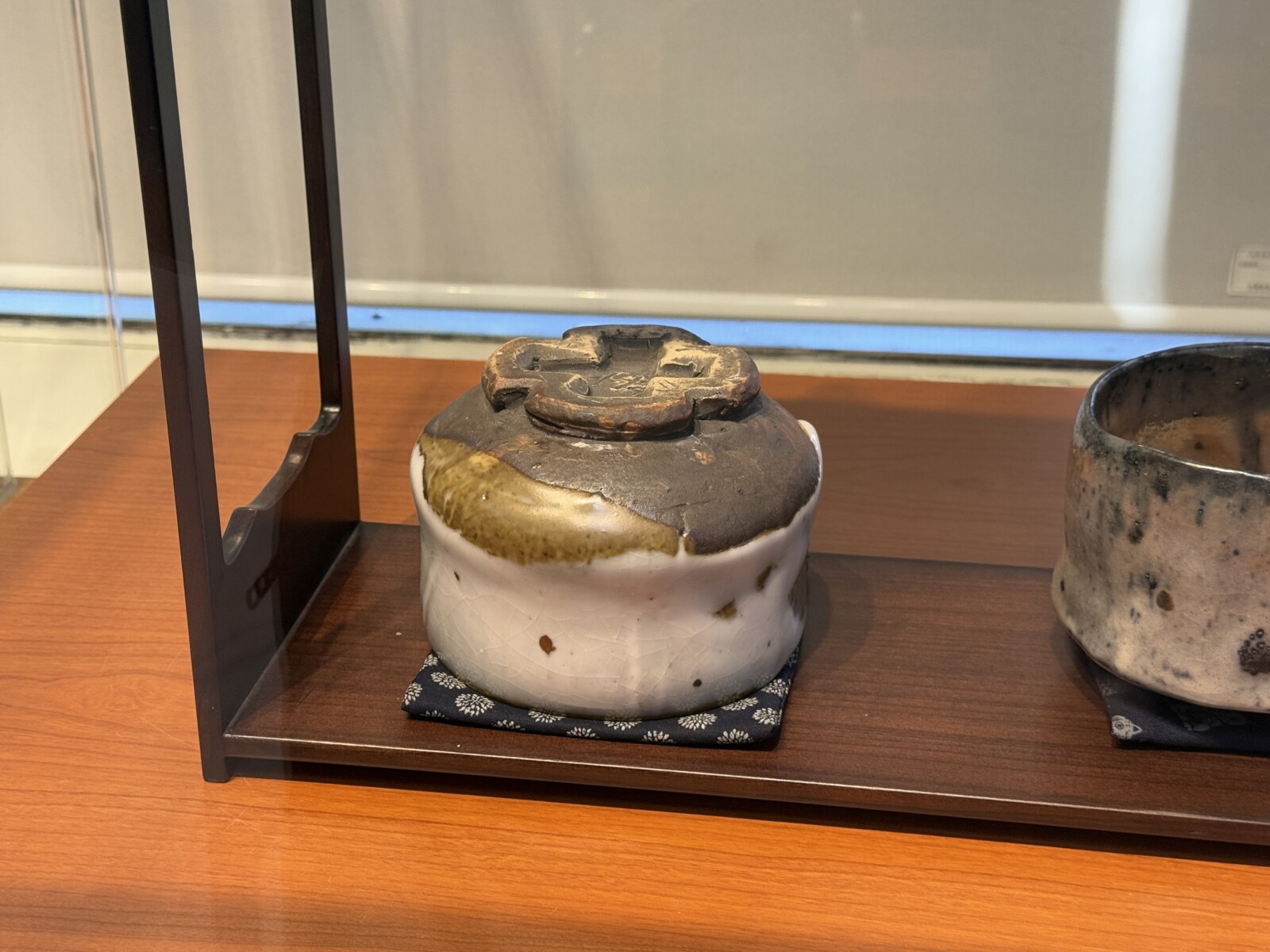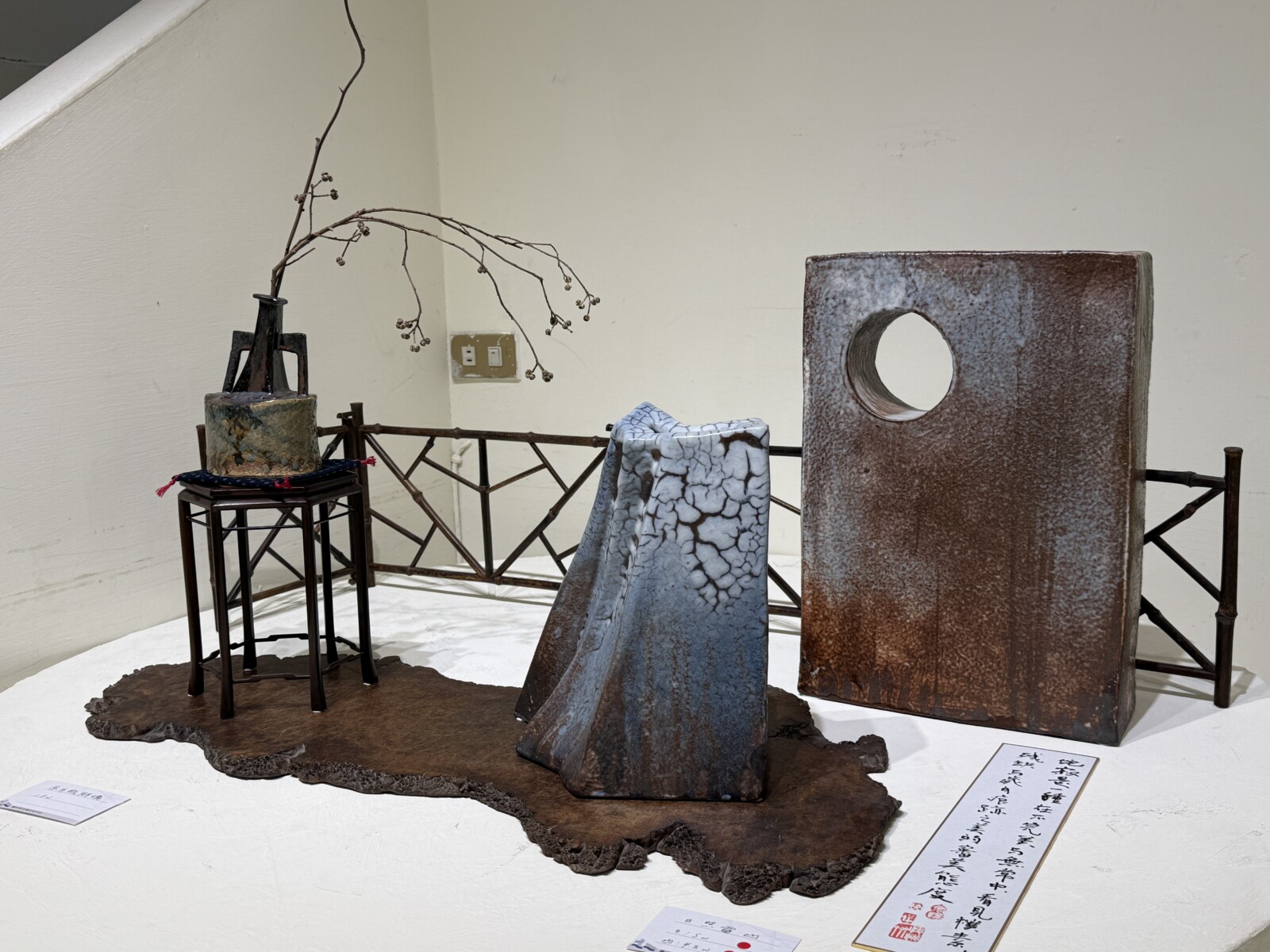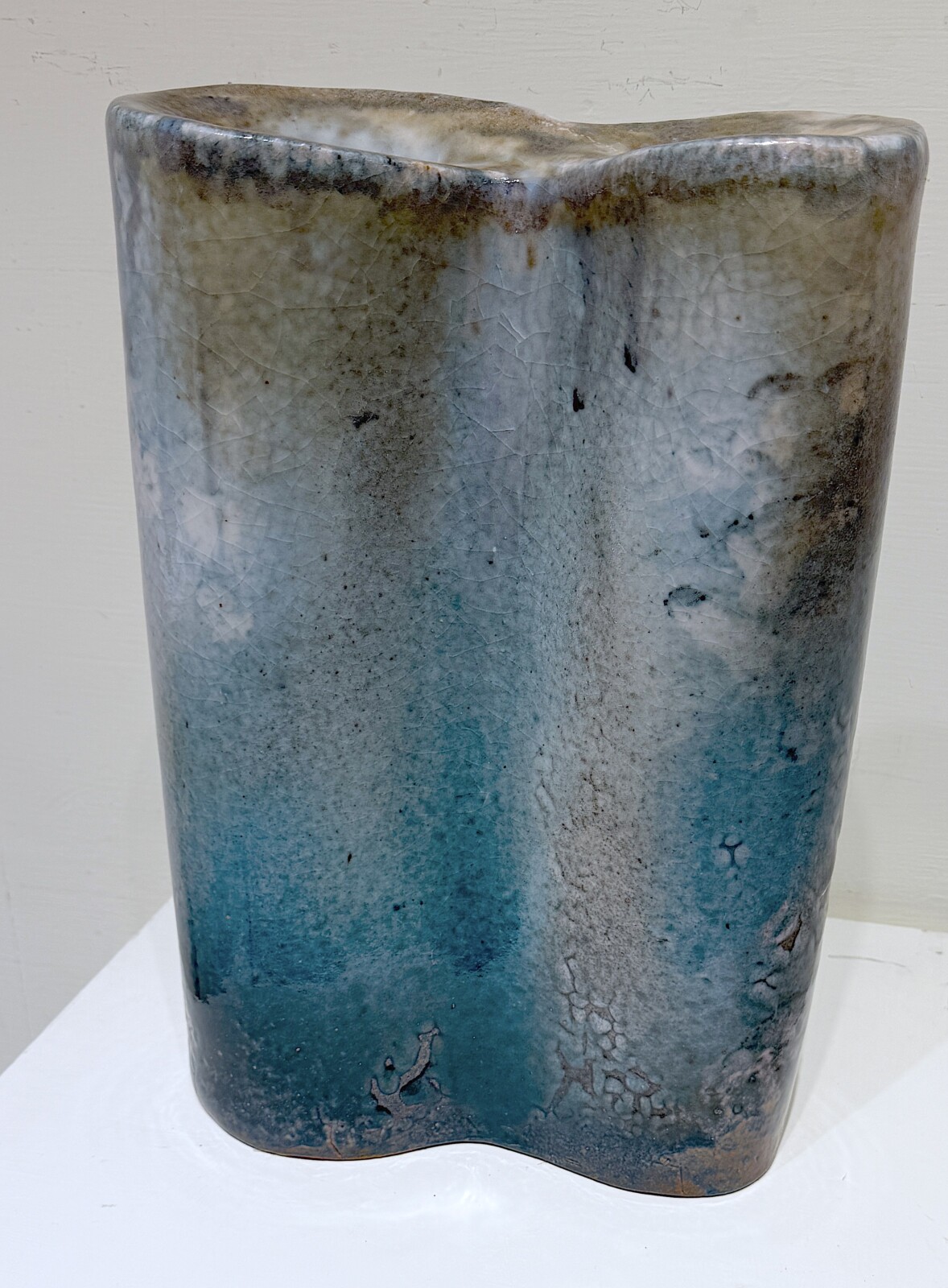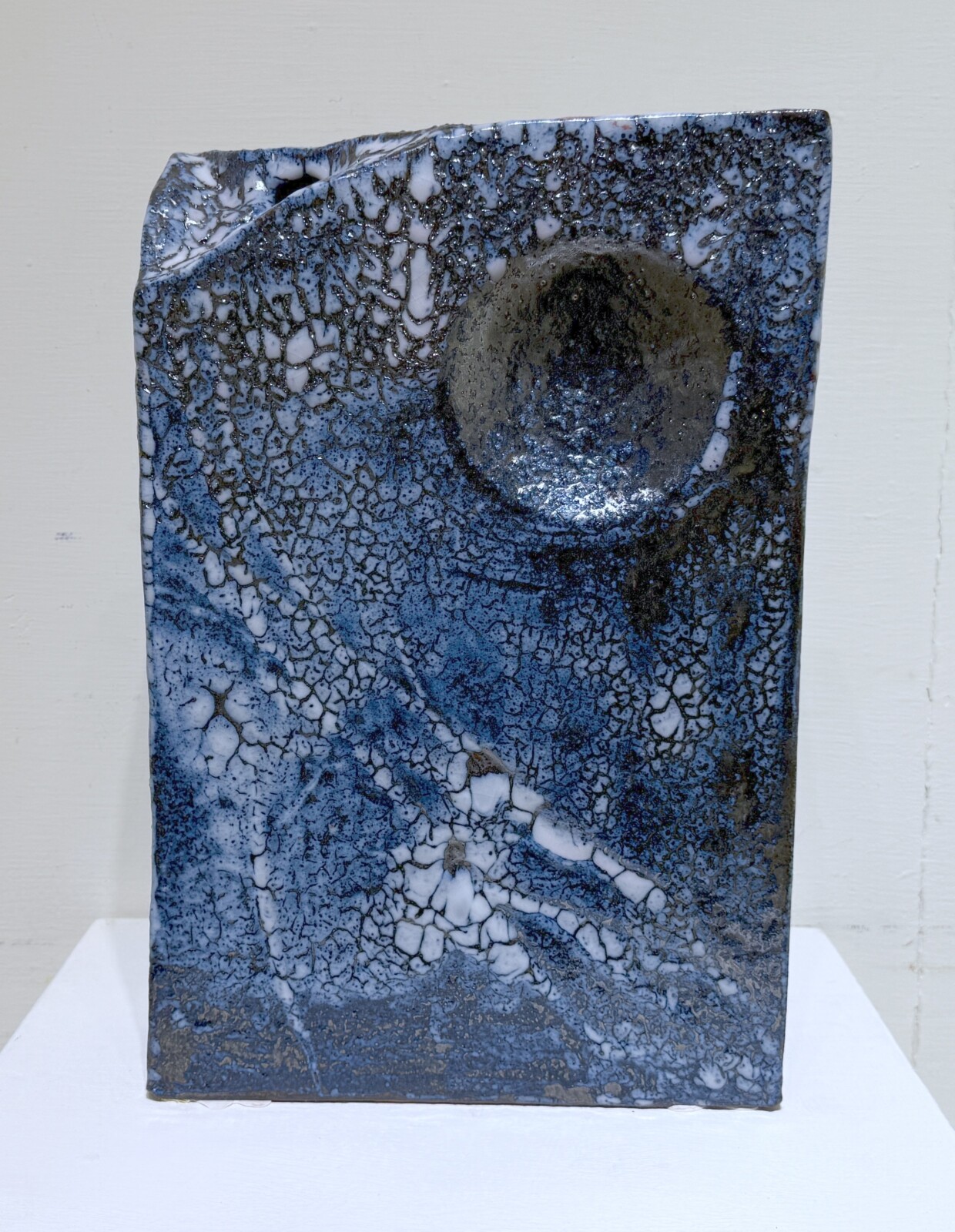
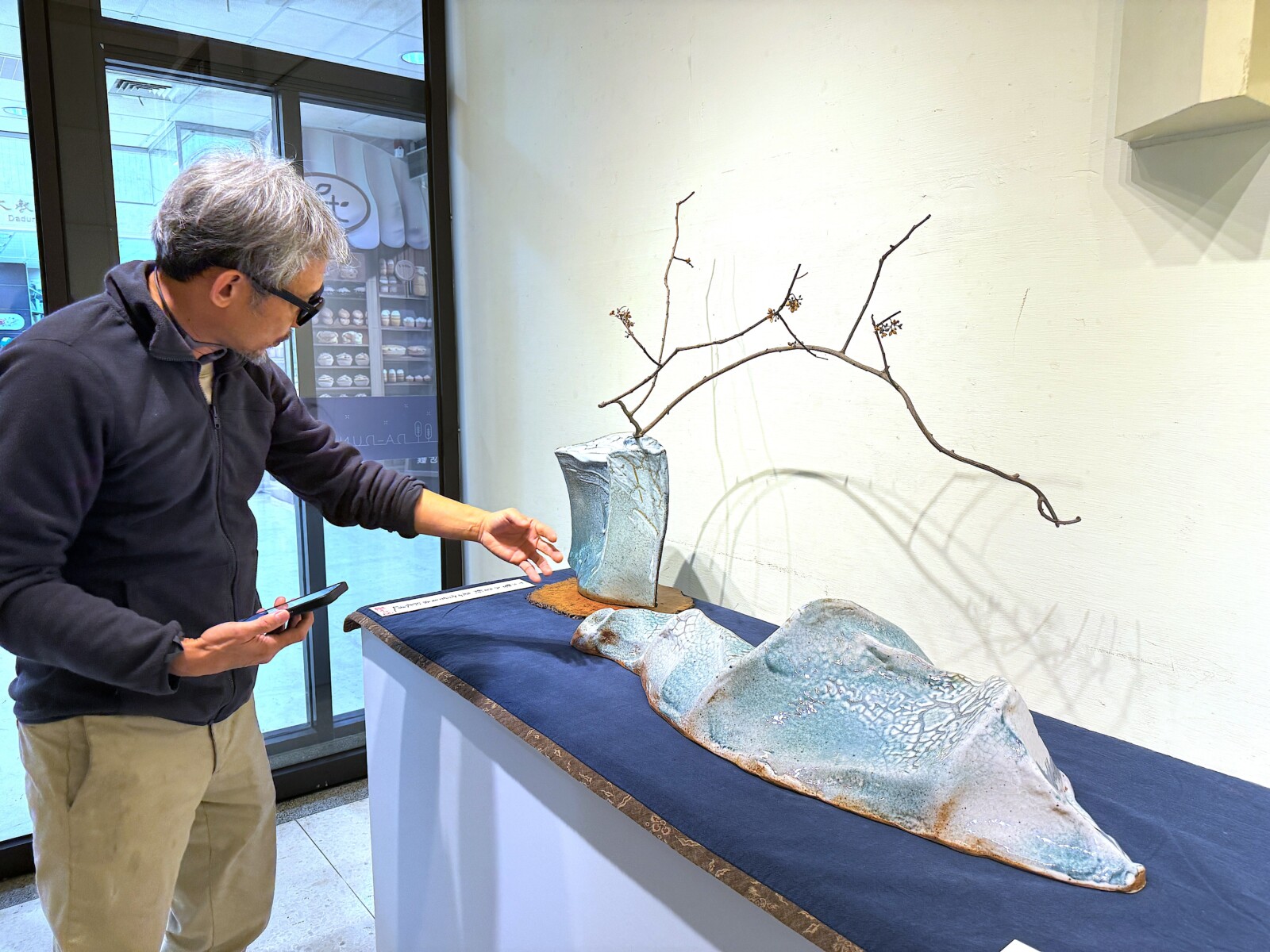
“Solidifying form is to gather ten thousand phenomena into one; refining vessels is like the ancient practice of alchemy—seeking the sublimation of the object.” — Ruban Yu
Ceramic creation is a very special field; the shaping of clay is infinitely free. However, in Taiwan, the field of ceramics is filled with many professional norms. Yet, walking into the “Solidifying Form and Refining Vessels” exhibition, encountering piece after piece of pottery, one meets more than just objects—one sees the scenery within Ruban Yu’s heart that breaks free from frameworks.
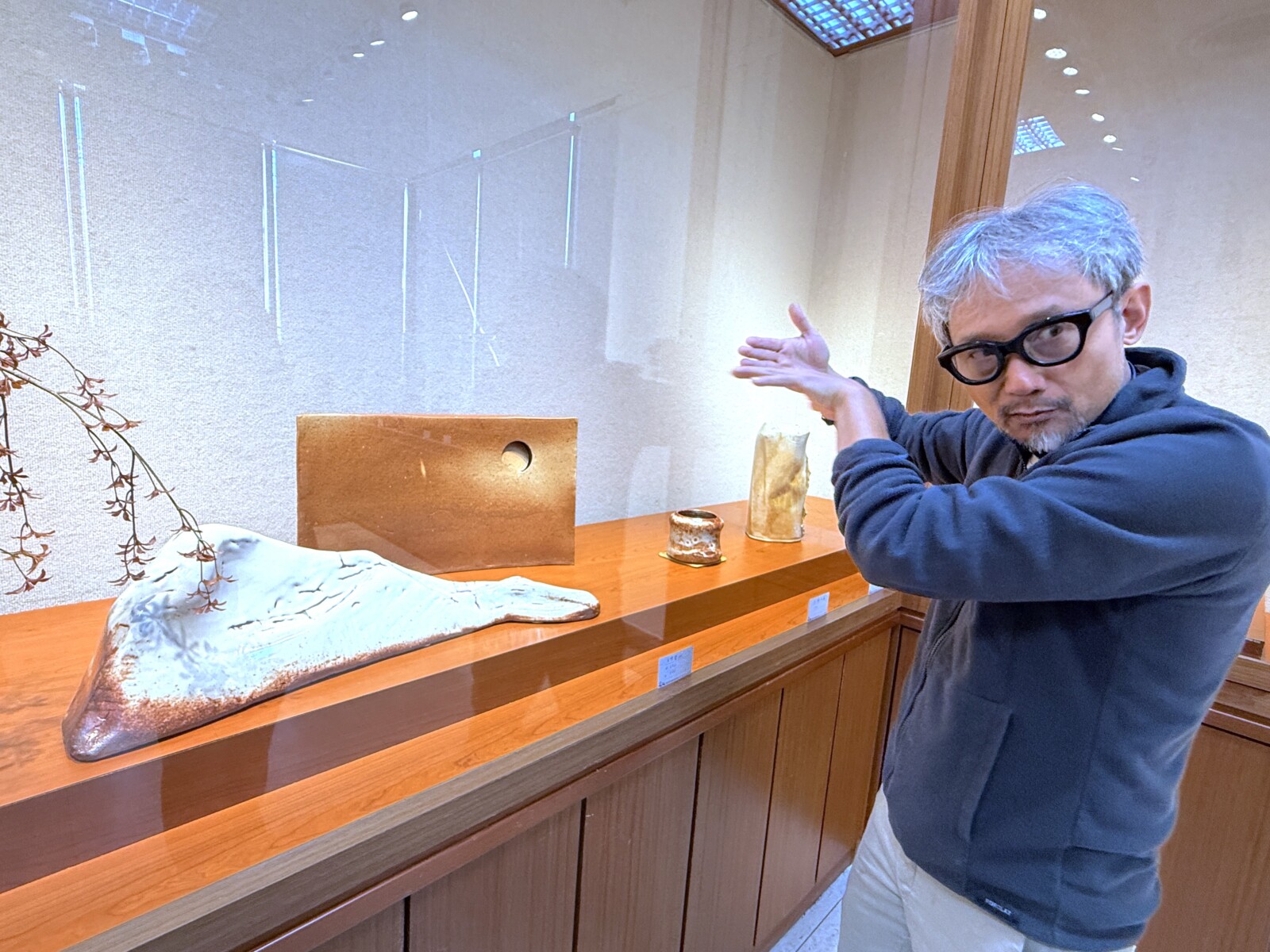
Breaking Free from Teaching Frameworks and the Objects Themselves
“I have tried everything the textbooks said was wrong,” Ruban Yu said during the exhibition tour, a sentence that left a very deep impression on me.
From the past to the present, in order to reach a certain technical level, we always feel we should stand on the shoulders of giants and follow the books. When others fail or suggest something shouldn’t be done, we naturally assume we shouldn’t waste time trying it ourselves. This saves us a lot of time, but it makes it difficult to encounter a completely different landscape.
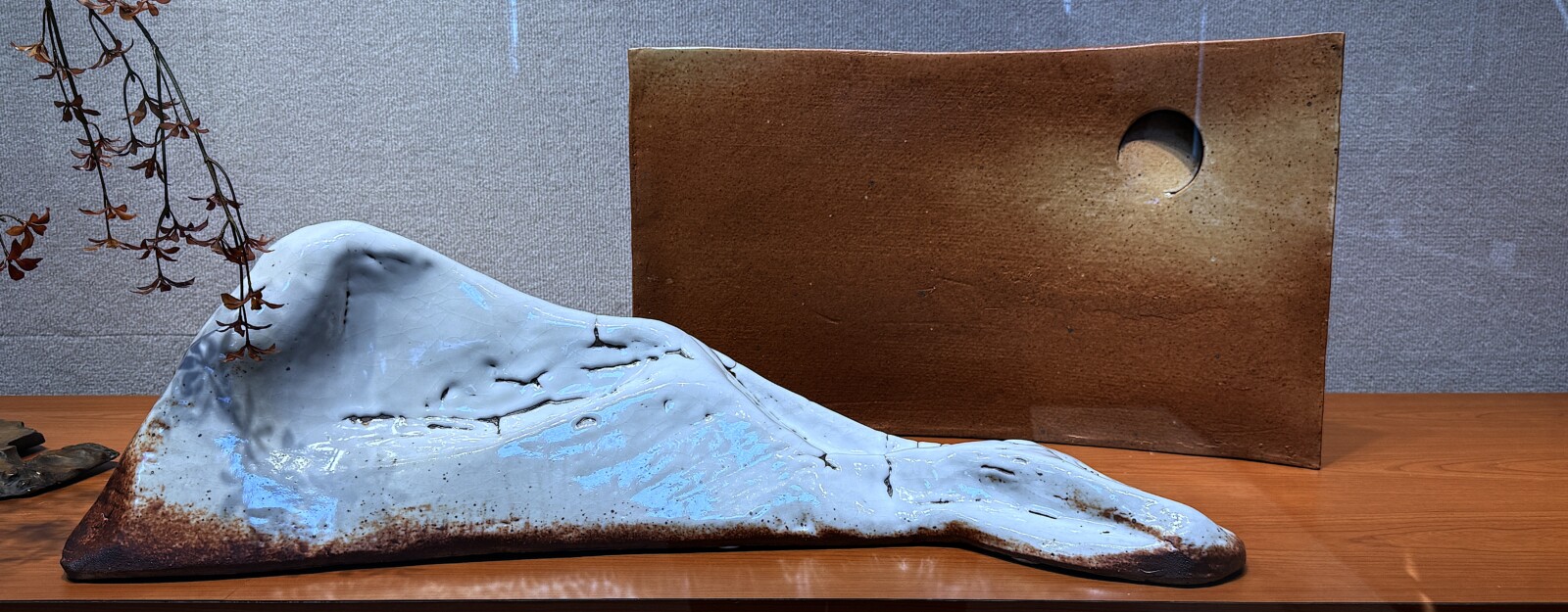
The bulk of the “Solidifying Form and Refining Vessels” exhibition is inspired by Gao Xingjian’s Soul Mountain. Every work made me feel a departure from the framework of ceramic creation. Instead, ceramics become elements of a scene. The goal is not to focus on the technical play of a single object, but to realize that romantic and perfect scenery in the heart through combinations and techniques.
Therefore, walking into the exhibition hall, most of the works seen are sets. Through simple arrangements, they can be the protagonist of a space or a supporting character. What does this mean? It means if I were to collect a work, I wouldn’t store it in a cabinet; instead, I would plan a corner in my home to place it, letting the work become a scenery within the space.
The Wabi-Sabi Aesthetics of a Scarred Life
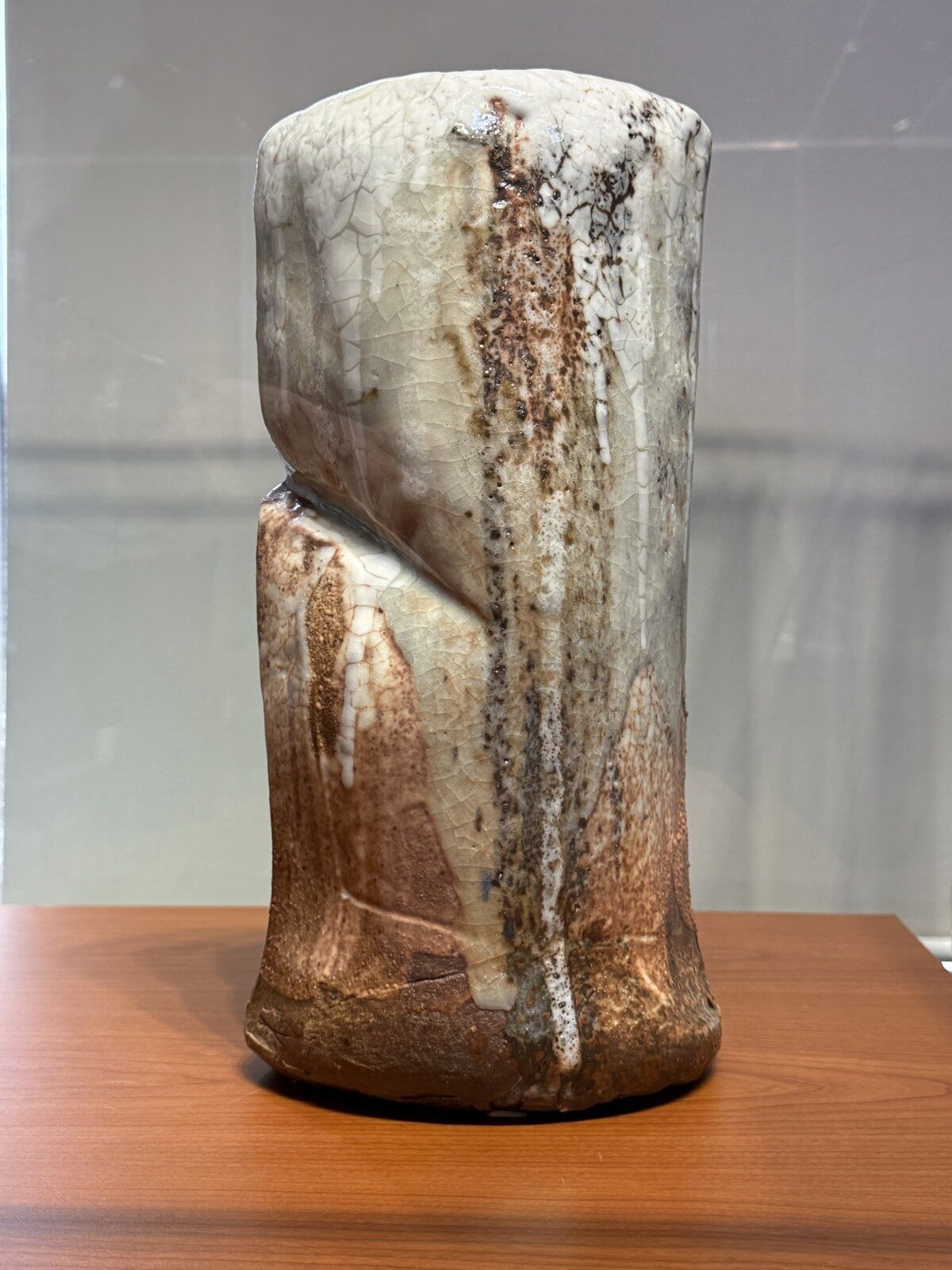
Beyond the landscapes, it is not hard to notice that most of Ruban Yu’s works bear a “scar.” At first, I thought these scars were made to represent specific themes, but since these scars appear across different works, they didn’t seem to have much direct connection to the subjects.
As it turns out, after Ruban Yu completes the shaping of a work, he deliberately strikes it with a blade to create a scar. This is a mark of respect for life experiences and his communication of the Wabi-Sabi aesthetics of life.
I once read in the book Wabi-Sabi about how this aesthetic is embodied in Japanese gardens. For example, after sweeping the garden leaves clean, one shakes the tree trunk so a few leaves fall; those fallen leaves are the manifestation of Wabi-Sabi.
Wabi-Sabi is a respect for nature and an acceptance of imperfection.
In the past, I always considered Wabi-Sabi to be the aesthetic foundation of objects and spatial design. But the single scar on Ruban Yu’s work becomes eternal after firing, meaning one must coexist with the scar long-term.
Is life not the same? We are often in a hurry to forget scars and pain, or eager to forget the imperfections of our lives. But it is precisely these imperfections that create our unique selves. Each piece of pottery bearing a scar seems to remind us that we should all try to reconcile with ourselves.
“Do not pursue neatness; machines can do that.” Scars make a work unique, just like those past experiences. “Solidifying form” brings out appearance, personality, and values. We are not refining vessels, but refining humans, seeking the sublimation of the soul.
After listening to the tour and coming back to my senses, I realized Ruban Yu’s works are no longer just ceramics—they are reflections on life experiences.